
The rate of disruption occurring in the financial services industry is at an unprecedented level, with more and more ‘fintech’ companies, like OFX, moving up the ranks and changing the way technology enhances the experience of moving money.
Imagine a world where the big banks are competing with companies that have low and nimble footprints, and use everything from new mobile technology to AI to make the customer experience seamless. We might not be quite there yet, but it’s not far off from our future either.

This new landscape of fintech companies are picking off parts of the banks and turning them into global businesses that boast a frictionless online experience for the customer.
Jeffrey Cole, Creative Director at the Centre for the Digital Future and member of the investment committee of the listed Evans & Partners Global Disruption Fund recently told The Australian, “one of the lessons of disruption which applies to banks, is offline legacy means nothing online.”
“Banks are not going to die. But you are going to see fintech companies pick off some things like foreign currency transactions. I think you will see very efficient service companies evolving that will pick off many of [the banks’] operations,” he says.
“Fintechs usually offer a better user experience, cheaper prices and a dedicated focus on solving a specific problem.”
Glen Frost, Founder; FinTech Summit & FinTech Awards.
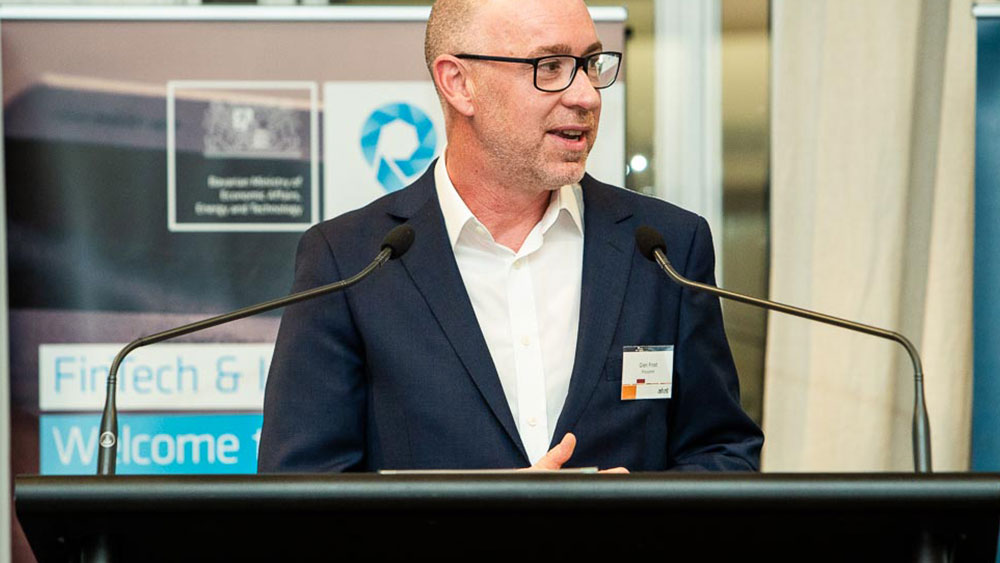
What are ‘fintech’ companies?
Glen Frost, Founder; FinTech Summit & FinTech Awards explains that fintechs typically offer “better user experience, cheaper prices and a dedicated focus on solving a specific problem. They can also develop products faster and cheaper than big banks as they don’t have the legacy staff and systems to fund or contend with.”
And the take up is evident. According to a report from Accenture in 2015, the value of global investment in fintech grew by 75% to $22.3 billion. The sector of financial services that saw the biggest disruption from fintech was consumer banking. This is likely because consumers are looking for new ways to transfer their money on-the-go and with as little friction as possible.
Traditional banks are typically slower to the punch when it comes to this, as many people are still hit with fees, large margins and limited hours in which they can seek assistance from customer support.
The infrastructure of the big banks also allows little room for agility – meaning that fintechs can scale and grow exponentially, offering new products and services all the time, while the banks are simply taking on digital technologies to improve their existing services.

Fintech offers the potential for a more inclusive future
The possibilities that come with this ‘decentralisation’ of financial services could create an ecosystem where banks and fintech companies can work more collaboratively in sharing resources, and therefore making it easier to keep up in our rapidly changing world.
Often, those working in the big banks typically have a background in banking. According to Glen however, ‘the people in these new fintech startups are often not from banking, they are from outside banking, and they want to make it better for the consumer.” This creates space for innovation in the broader skills and knowledge exchange that can be bought to a company when the people working in that company come from diverse backgrounds.

But what about regulation?
As a heavily regulated industry, financial services need consumer trust. This may be why we’re seeing a shift in customers choosing smaller, more personalised (and transparent) service from startups that specialise in a certain sector of finance.
According to a report on banking disruption from PwC, the regulators themselves will begin to turn to better technology to ensure that their compliance measures are held up, putting big banks in a tricky position to keep up, which means re-defining their traditional processes, particularly for paperwork. Because fintech is designed as digital from the beginning, there is no paperwork, and there’s a lower risk for incidences of the kind of fraud that comes with that.
Glen explains, “this kind of fraud can be avoided when there is a fully digital trail with open APIs that can be fed into the regulators. The ‘reg-tech’ side of fintech can, and will be a massive opportunity to help regulators know what is going on.”
The idea for regulators here is the ability to pick up or predict problems before they actually become an issue and they have to remedy this after the fact.
It’s likely with the uptake of fintech startups around the globe that more and more people will turn to these companies for their financial needs. As a startup formed on Sydney’s northern beaches over 20 years ago, OFX has firsthand experience of the joy customers feel when making seamless money transfers on their own schedule, not the banks.
IMPORTANT: The contents of this blog do not constitute financial advice and are provided for general information purposes only without taking into account the investment objectives, financial situation and particular needs of any particular person. OzForex Limited (trading as OFX) and its affiliated entities make no recommendation as to the merits of any financial strategy or product referred to in the blog. OFX makes no warranty, express or implied, concerning the suitability, completeness, quality or exactness of the information and models provided in this blog.