Impacts of US/Iran conflict on markets.
By the OFX team | 11 March 2026 | 6 minute read
Early Saturday morning, on the last day of February, when Israel and the US launched, widespread airstrikes on Iran. Iran responded with strikes on Israel and US bases in the Middle East. Although it is never really absent – and certainly no trader can ever ignore it – geopolitical risk had returned as a key factor to markets.
Markets had known for months that talks were continuing over the Iranian nuclear program and ballistic missile development, and in more recent weeks, US warships had openly been deployed around the region. As Iranian nuclear and military sites were targeted in June 2025, lasting 12 days, it was unlikely that the perceived threat was considered resolved.
Initial safe haven reactions.
While there was an initial “safe-haven first” reaction to gold and the US dollar, sharemarket futures fell while waiting for a lead from full market sessions. There was really only one trade considered a near-certainty, with Brent crude futures surging from levels around US$72.48 a barrel.
Oil prices were already creeping higher, as traders braced for supply disruptions given that nuclear talks between the US and Iran had yet to reach an agreement, but the attacks over the weekend as February turned to March lit a fire under the market.
During Asian market opening on March 1, Brent crude futures surged 13% to a peak of US$82.17 per barrel, up US$9.30 from the February 27 close. West Texas Intermediate (WTI) spiked 12% from previous closing levels.
In keeping with the safe-haven behaviour, spot gold lifted about 1.6% following the escalation and the US dollar firmed about 0.3%. But the Swiss franc showed little change and the Japanese yen eased about 0.5% against the US dollar. Burnishing its “digital gold’ credentials was Bitcoin, which strengthened about 1.7% to around US$66,880. Conversely, as expected, sharemarket futures fell.
Oil market under pressure.
Now that markets have had a full week to absorb matters, the oil trade is the standout beneficiary, with Brent up 38.6% from its February 27 close, and WTI up an eye-watering 58.7%, with both back above US$100 a barrel. But neither gold nor Bitcoin has held on to any safe-haven status, both retreating: the only haven still holding its own is the USD, with the US Dollar Index up about 2%.
Of course, taking a snapshot of a week of trading can be misleading. Gold, for instance, suffered a sharp correction of 11% early in February, but still showed a gain of 8.5% for the month; and the yellow metal has tripled in price in three years. If the conflict were to widen further, gold’s reputation and attributes could reasonably be expected to help it rise.
Prior to the escalation, the US dollar had been under pressure from a mounting list of problems, such as the potential for Federal Reserve rate cuts driven by a weaker growth outlook, aggressive trade tariffs creating economic uncertainty, the general acceptance that the United States has unsustainable debt levels and a widespread rethinking of ‘US exceptionalism,’ but the need for a safe haven has pushed some of those concerns to the back-burner.
In the short term, markets are pre-occupied with the broadening impact of the conflict as expressed through the oil price, back above US$100 a barrel, at time of writing.
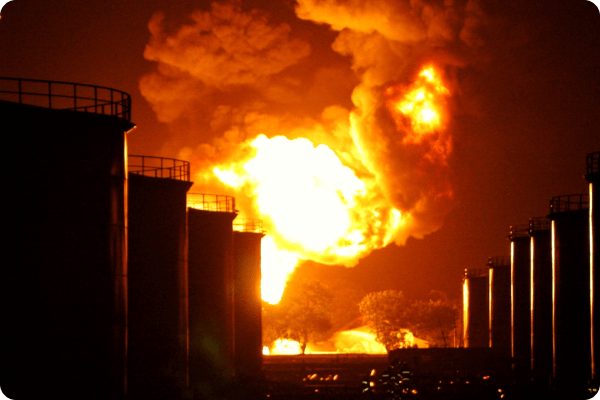
The Strait of Hormuz is effectively closed, more through skyrocketing vessel-chartering and insurance costs than through government decree or military threat. About 21 % of global oil flows transit the Strait of Hormuz. Qatari news network Al Jazeera reported that a blocked Strait could remove up to 17 billion barrels of oil from the market – roughly 5.5 months of global crude demand. This is even before any potential supply disruptions caused by any attacks on infrastructure owned by other producers in the region, such as Saudi Arabia, Kuwait, Qatar, Bahrain and the United Arab Emirates (UAE). The impact of supply disruptions is what has pushed oil prices back into three figures for the first time since 2022, after the biggest weekly rise since the Covid-19 pandemic.
The oil market has been spooked by comments from Qatar’s energy minister, who predicted1 that if the conflict continued unabated, that all Gulf energy exporters would shut down production within weeks and oil would rise to US$150 a barrel.
It is not only oil: prices in some gas markets have surged to 3-year highs, while thermal coal (Newcastle futures, which act as the Asian benchmark) has lifted 15.5% since the end of February, to be up 24.5% in 2026.
Hydrocarbon energy supplies the vast bulk of the world’s primary energy – a proportion put at 79% in the International Energy Agency’s (IEA)’s latest (November 2025) World Energy Outlook2, and declining to 71% by 2035 even in the Agency’s Stated Policies Scenario (STEPS), an exploratory scenario, designed to reflect the prevailing direction of travel for the energy system based on a detailed reading of country-specific energy, climate and related industrial policies that have been adopted or put forward. Simply put, the oil price is still as crucial to the world economy as it ever was.
Inflation, interest rates, and asset markets.
And that is where the economic danger posed by the current Middle East crisis lives – in the disruption to global economies. And, because energy is such an important input to the modern world, it is embedded in the prices of everything we use and consume. As such, it is an extremely important driver of inflation. Higher energy prices have a direct earnings impact on companies: a sustained oil price climb could lift inflation expectations and bond yields, pressuring long-duration growth valuations by raising discount rates. That is highly influential on the share prices of companies such as Nvidia, Microsoft, Apple, and Alphabet, which have very hefty price-earnings (P/E) multiples that are sensitive to future revenues and real yields.
It is inflation that plays such a central role in interest-rate settings, which affect all other asset-class settings, from the perception of the US 10-year Treasury bond as the least risky asset in the world, all the way out to the frontiers of risk, through fixed-interest, equities and currencies.
Right now, the oil price is the asset class to watch, but gold and the USD are not far behind. The USD was struggling prior to the late February attacks in Iran, as the market bought (to a certain extent) the story that the currency was on a slide as the world saw the stirrings of “de-dollarisation,” the perceived global trend of central banks, businesses and governments to reduce reliance on the US dollar for trade, reserves and financial transactions, so as to mitigate exposure to US (that is, the Trump White House) policies and sanctions.
In particular, China was aggressively pushing the case of its renminbi (RMB), to reduce reliance on the US dollar, tapping into geopolitical concerns over Western sanctions and an expressed desire in many areas for a more multi-polar financial system. Although the USD’s status as the dominant reserve, FX and trade currency was near-total, it was fair to say that it was seeing the first dents put in its surface for a long time, as China promoted RMB for cross-border payments and commodity transactions, and worked to grow RMB-denominated assets, all of a piece with Beijing’s long-held desire to challenge the US’ global economic supremacy.
But the US efforts to bring about regime change in Venezuela in January this year, and now Iran, have a fascinating backdrop in that US actions have severed China’s flow of cheap oil, and potentially brought China unwillingly back into US dollar-based energy markets. While there is a lot to play-out from the 2026 attacks on Iran, in a broad range of areas, that is one potential consequence that might be worth pondering: that almost unnoticed, the US has underwritten its currency’s global dominance, against long-term challenge.
