
Home Blog Business OFX appoints a new CEO

Skander Malcolm

Skander Malcolm joined OFX in February 2017 as CEO. As an innovative business leader with experience around the globe, Skander is heralding a new era at OFX as the company develops an even stronger brand at home and abroad.

With more than 23 years’ experience in financial services in both established and emerging markets, Skander is focused on driving growth and market share while developing talent and increasing employee engagement.
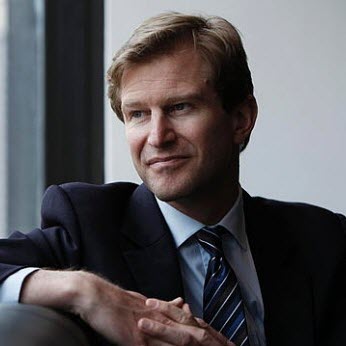
Skander Malcolm

Career Highlights:

  • As President and CEO of GE Capital (ANZ), Skander led a team of more than 4,500 employees with an emphasis on delivering sustainable growth and operational excellence.  
  • While in the U.K., he launched the country’s first and largest digital personal loan business, Hamilton Direct Bank, which grew to more than £3 billion in its first five years. 
  • While at GE, he also facilitated GE’s largest ever volunteer donation to OzHarvest and bolstered participation in employee volunteering by 40%.

In his early days at OFX, Skander has already overseen a variety of improvements, and we look forward to announcing additional innovations as the year progresses.

IMPORTANT: The contents of this blog do not constitute financial advice and are provided for general information purposes only without taking into account the investment objectives, financial situation and particular needs of any particular person. OzForex Limited (trading as OFX) and its affiliated entities make no recommendation as to the merits of any financial strategy or product referred to in the blog. OFX makes no warranty, express or implied, concerning the suitability, completeness, quality or exactness of the information and models provided in this blog.


OFX team
Written by

OFX team

We help businesses and individuals securely send money around the world by making it easier to navigate the complexities of foreign exchange. Our team consists of foreign exchange experts, dedicated support staff and knowledgeable writers.

Other interesting reads

Currency Outlook March.

Currency Outlook March.

The below key drivers are likely to impact investor risk sentiment and FX markets in March: The US/Iran conflict has escalated geopolitical uncertainty, which is pushing investors toward safe-haven currencies and adding volatility to FX markets. The conflict is causing disruptions to key oil and gas routes, driving higher energy costs, influencing inflation and currency performance. Central bank policymakers are adjusting interest rate expectations to manage inflation and stabilise currencies amid global uncertainty. EUR | Euro The euro has come under pressure as the US/Iran conflict disrupts energy supplies, driving up oil and gas costs and raising concerns about economic...

Read More

Why OFX continues to lead in FX

CNBC Select just named OFX best for large international transfers—here’s why businesses and individuals around the world trust OFX with their FX. OFX was recently awarded the Best International Money Transfer App for Large Transfers by CNBC Select. It’s recognition like this that reinforces what over 1 million clients already know: when it comes to moving money across borders with confidence, OFX is a trusted ally. This award reflects our dedication to fast, secure transfers at great rates, and the expertise that helps you stay in control, even when markets move fast. Jump to: • Why CNBC Select awarded OFX•...

Read More
How fast-growing SMEs are saving time with accounting integrations

How fast-growing SMEs are saving time with accounting integrations

Running a business is a balancing act. You’re scaling operations, managing cashflow, expanding into new markets, all while keeping a lean team.For many small and medium-sized enterprises (SMEs), the challenge isn’t just growth. It’s growing smarter. Accounting integrations as a strategic enabler One of the effective levers high-performing SMEs are using today is accounting integration: connecting financial tools so that data flows automatically and teams can focus on value. Traditionally, managing local and global transactions has meant juggling multiple systems: one for accounting, one for payments, and one for FX conversions.  The lack of integration forces manual data entry across...

Read More