To buy overseas shares:
- Create an online trading account with a reputable online broking service to access international stock exchanges.
- Create an OFX account to save up to 75% on exchange rate margins and fees.*
- Collect all of the necessary banking information required to set up your international money transfer.
- Finalise your transaction and track it with the OFX mobile app.
A good way to diversify your investment portfolio and to find hypergrowth is by purchasing overseas shares in businesses that are traded on stock markets abroad.

Find the best online broker for stock trading
An online broking service will allow you to create an online trading account, and it will give you access to the biggest international stock exchanges, including NASDAQ, Euronext, London Stock Exchange, and New York Stock Exchange.
Keep in mind that it’s usually more expensive to invest in overseas shares than it is to invest in domestic shares, so it’s important to be aware of all of the fees that you’ll be charged for every transaction. Online broking services are typically more affordable than full service brokers, as they won’t give you trading advice and will only charge you when you sell or buy. However, you should still watch out for currency conversion fees, internal transfer fees, and foreign security custody fees, as a few examples.
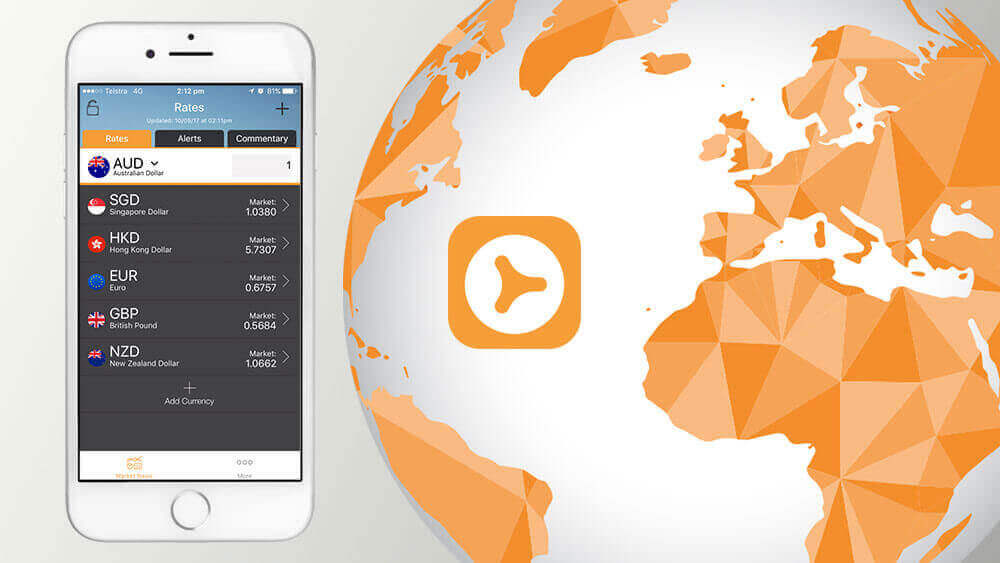
Use OFX to save money when buying overseas shares
To avoid the high fees that come with purchasing international shares, create a free account with OFX. You’ll be able to set up online money transfers whenever you’re ready to buy shares, and you can track every transaction with our mobile app.
Plus, every transfer is swift and secure, and you can lock in a great exchange rate with a Forward Contract or use a Limit Order to wait for the ideal exchange rate to kick in, so you can grab those shares at the most opportune moments and increase your profits.
*Average savings based on published rates of ANZ, Westpac, NAB and CBA on a single transfer of AUD$10,000 to USD between 21.2.17 and 2.3.17. Transaction costs excluded. Quoted savings are not indicative of future savings.
IMPORTANT: The contents of this blog do not constitute financial advice and are provided for general information purposes only without taking into account the investment objectives, financial situation and particular needs of any particular person. OzForex Limited (trading as OFX) and its affiliated entities make no recommendation as to the merits of any financial strategy or product referred to in the blog. OFX makes no warranty, express or implied, concerning the suitability, completeness, quality or exactness of the information and models provided in this blog.