As markets oscillate and we look for the right time to transfer our money the question that often comes to mind is ‘What factors are affecting currency exchange rates?’ This blog series aims to answer that very question.
In this four-part series we focus on how politics can impact foreign exchange.
Ready to start transferring with OFX? Register now
Politics in the foreign exchange space
While many factors influence currency exchange rates, one of the top components affecting FX rates is politics.
Political factors such as political party economic stances, elections, social unrest, and geopolitical tensions can create volatility in the FX space.
This is because the temperature of the current political climate in any given market either ensues confidence in that nation’s currency or creates a lack of certainty around that economic system.
According to a piece by Jefry Frieden, Professor of Government at Harvard University, exchange rates and political policy are intrinsically linked: “Exchange rate policy is inherently political. A currency’s value and degree of stability are set, or at least strongly influenced, by the government.” This means that as markets fluctuate and exchange rates adjust, there is often a political spurring behind the oscillations.
The main political factor influencing currency exchange rates is political instability, which can be reflected through impeachments, international relations, elections, and political issues such as wars. – Treasury OFXpert, Isaac Figueroa
Political events that can trigger volatility
We’ve established that politics and exchange rates are tightly correlated, so what types of political events can trigger FX rate volatility?
These events most often take place in the midst of political instability of any kind. That could be an election, impeachment, or tensions with another nation. Each of these instances could have a strong impact on FX rates because events like these can spur the beginning of unknown change or, potentially, instability.
To get a better understanding of these examples, we connected with our Treasury OFXpert, Isaac Figueroa to discuss past occurrences of political instability that have impacted foreign exchange rates.
“Political instability, such as the 2024 US elections and political issues, such as the US and China economic war are examples of political events that could affect currency exchange rates,” Figueroa said.
Markets are speculatory, there is no way of definitively knowing what the next rate decision from a given central bank will be or if employment numbers will be dipping or surging. However, we know that when you plan to make an international transfer the first thing you do is look for all the available market information to ensure you are timing your exchange to achieve the best rate.
Looking for any events that will undoubtedly create change will influence FX rates. This is why political events have a strong effect on the currency exchange rate.

Navigating fluctuating FX rates
What can you do to prepare yourself for fluctuating FX rates, that can be impacted by political events? Working with an FX specialist, like an OFXpert, can help you understand the current currency climate. Our OFXperts have various tools to assist you in planning for rate swings and securing the best rate for your business. Some of these tools include:
- Currency Outlook- our experts provide daily and weekly commentary on the value of the New Zealand dollar and what global events, political factors or central bank decisions can affect and cause fluctuations. Subscribe to receive commentary, direct to your inbox, or read online.
- Risk Calculator- Have you ever experienced exchange rates shifting between the time you receive an invoice and its due date? Use our risk calculator to determine the impact shifting market exchange rates could have on an example invoice. This is not a quote, it’s designed to help you understand the impact of currency fluctuations.
- Rate Alerts- Stay on top of moving markets with OFX rate alerts. Get personalised market rate alerts direct to your inbox. Our currency experts will monitor the ever-changing market for you.
Leveraging OFX’s easy-to-use tools in combination with support from a trusted OFXpert can help your business plan for FX volatility, no matter the source contributing to rate fluctuations.
While political factors are just one component affecting currency exchange rates, they play a big part in the fluctuating FX rates you watch daily. Stay tuned for the next instalment in this series where we will discuss how economic policies influence the rate of foreign exchange. Interested in learning more about how OFX can help you navigate the FX market? Contact an OFXpert today!
Stay up to date with currency movements
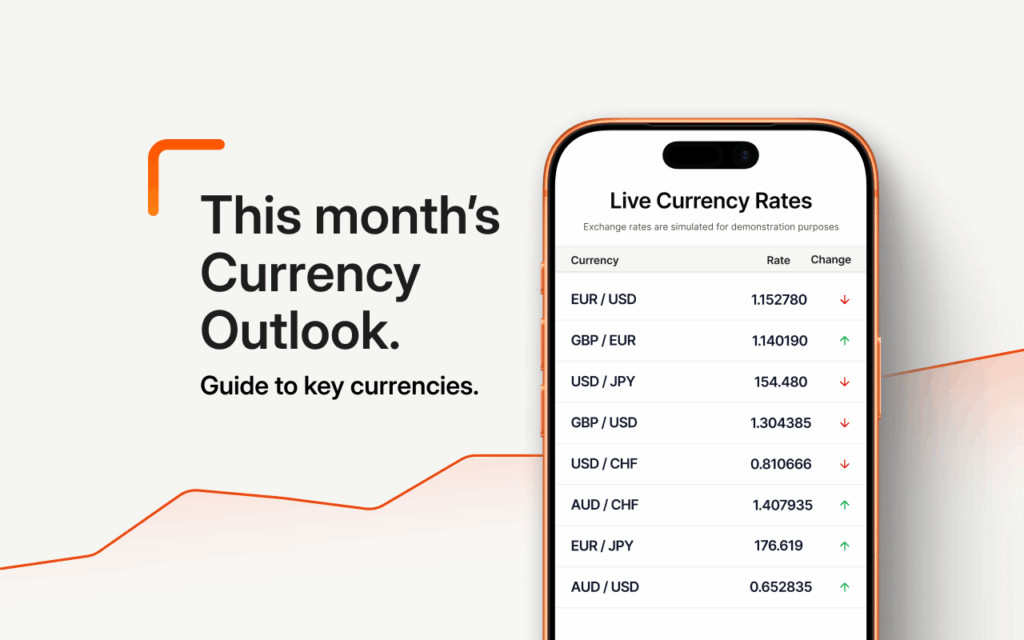
Read our monthly Currency Outlook to stay informed about major factors that could impact exchange rates for key currencies in the month ahead.
Navigate rate swings in turbulent times. Our OFXperts can help you make more informed decisions about hedging and risk mitigation. Contact us.
IMPORTANT: The contents of this blog do not constitute financial advice and are provided for general information purposes only without taking into account the investment objectives, financial situation and particular needs of any particular person. UKForex Limited (trading as “OFX”) and its affiliates make no recommendation as to the merits of any financial strategy or product referred to in the blog. OFX makes no warranty, express or implied, concerning the suitability, completeness, quality or exactness of the information and models provided in this blog.