Choosing between virtual and physical corporate cards isn’t just a matter of preference, it’s a strategic decision that can affect security, visibility, and your team’s ability to move quickly.
But when you compare virtual vs. physical cards, which one actually fits your workflow?
Physical vs. virtual cards: What’s the difference?
Both card types typically serve the same core purpose: helping teams spend company money efficiently. But there are additional benefits and caveats with each approach.
| Virtual cards | Physical cards |
| Virtual cards are digital-only payment cards that exist electronically. They include a card number, expiration date, and CVV, just like physical cards, but are accessed via a secure platform or mobile wallet. You can issue them instantly, assign them to employees or vendors, and define custom usage rules. Virtual cards are: – Digital-only – Often issued instantly – Assigned to a person, team, or project – Available online or in mobile wallets – Can be single-use, merchant-locked, or budget-capped – Ideal for remote teams and online payments | Physical cards are tangible cards employees use in person or online. They’re essential in situations where digital payments aren’t accepted and are commonly used for travel, hospitality, events and fieldwork. Physical cards are: – Tangible cards – Great for in-person purchases – Perfect for travel, hospitality, events, and on-the-go staff |
When virtual corporate cards make the most sense.
Virtual cards are designed for modern, distributed ways of working. If your team spends primarily online or operates across locations and time zones, virtual cards offer speed, flexibility, and control without the friction of physical delivery.
They work anywhere a standard card works online and can be added to mobile wallets for tap-and-go payments, no plastic required. This makes virtual cards particularly well suited to remote employees, contractors, and globally distributed teams.
Key benefits of virtual corporate cards.
Here are just a few reasons virtual cards are a go-to for distributed teams:
- Fast access (after set-up)
Issue cards quickly once your account is onboarded and verified. In many cases, prepaid or debit-based virtual cards can be created instantly, while some credit cards may require additional approval. - Security-first
Freeze or cancel cards instantly if something looks off. No physical card means no physical risk. - Unlimited cards
Issue as many cards as you need. Ideal for digital ad spend, tracking individual SaaS subscriptions, and one-off vendor payments.
One of our team members needed a card before a Monday work trip, and we were able to issue a digital card within 30 minutes.
– Sarah Mitchell, Group Executive, Operations | Stone & ChalkStone & Chalk are proof: When your tools match your pace, growth gets a lot easier
How virtual cards reduce risk and improve control.
One of the biggest advantages of virtual cards is the level of precision they provide. They help eliminate many of the fraud and misuse risks commonly associated with older-style corporate cards, including:
Prevent subscription sprawl
Assign each subscription its own virtual card.
- Freeze or delete the card when the tool is no longer needed.
- Remove the risk of unexpected auto-renewals.
Vendor-specific budgeting
- Assign cards and budgets to specific vendors.
- Avoid spend overruns without appropriate approvals.
This level of control is difficult to achieve with traditional corporate cards alone
Why physical corporate cards still matter.
Not all business spending happens online. Physical corporate cards remain essential for in-person purchases, travel, hospitality, events, and situations where mobile or online payments aren’t accepted.
While traditional physical cards once lacked real-time visibility and control, modern corporate cards are designed to work hand-in-hand with today’s finance teams. Many now include built-in expense management capabilities, such as:
- Real-time spend tracking
View transactions instantly as they occur. - Custom budgets and approvals
Set spending limits and approval rules by role or team. - Instant receipt capture
Upload receipts on the go via a mobile app. - Remote card controls
Lock or cancel cards immediately if they’re lost or compromised.
And for added flexibility, physical cards can also be loaded into mobile wallets like Apple Pay or Google Pay, bridging the gap between in-person and digital payments.
Spend visibility and reporting across both card types.
Corporate cards aren’t just about payments, they’re about smarter financial decision-making.
As businesses scale, managing spend across teams, locations and vendors becomes increasingly complicated. Without clear visibility, finance teams are left chasing receipts, guessing who spent what, and uncovering issues only after the fact.
OFX Corporate Cards, for example, give you full visibility to:
- Track spend by person, team, project, or vendor.
- Spot duplicate subscriptions or out-of-policy spend.
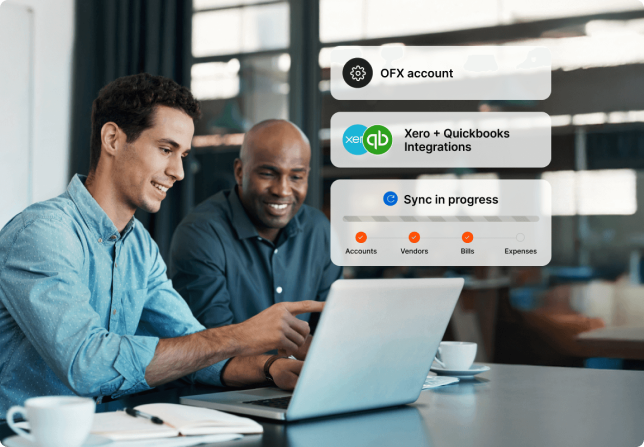
- Sync to accounting tools like Xero and QuickBooks Online.
- Stay audit-ready with real-time data.
This means no mystery charges, no end-of-month surprises, and
no chasing receipts. You get clean, clear, accountable spending.
OFX virtual cards vs OFX physical cards vs traditional corporate cards.
Feature | OFX virtual cards | OFX physical cards | Traditional corporate cards |
| Delivery time | Almost instant, unlimited cards | Delivered physically | Days or weeks |
| Controls | Flexible controls including: > Single or multi-use cards> Per-card, per-budget or per-employee limits> Daily, weekly, monthly or annual limits> Easily frozen or cancelled | Flexible, employee-level controls including: >Employee-assigned > Can be instantly frozen and physical replacement provided if compromised | Broad or monthly limits only. Deactivation often requires bank processing via bank app. |
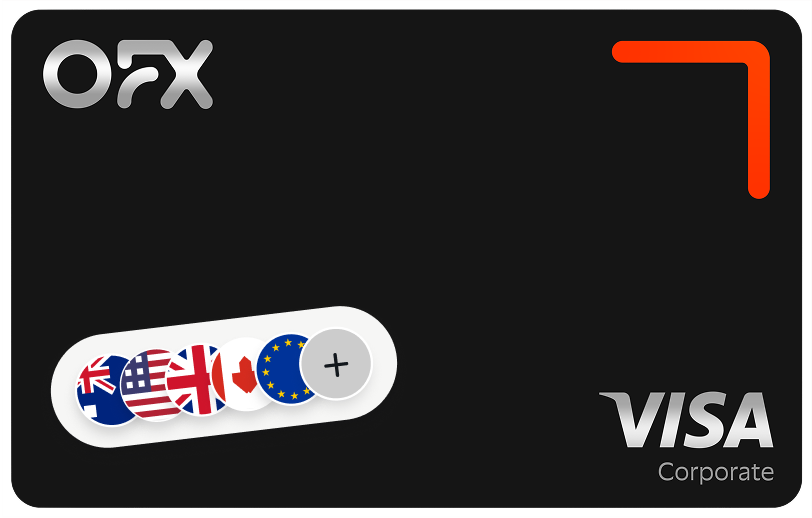
| Currency support | 30+ currencies | 30+ currencies | Limited/higher FX fees |
| Sync with accounting software | Yes, syncs to Xero, Quickbooks Online | Yes | Often incomplete data |
| Receipt capture | AI supported | AI supported | Manual, inconsistent |
How companies combine virtual and physical corporate cards.
In practice, there’s no single “right” way to activate corporate cards. The most effective structures reflect how a business operates today, while allowing room to evolve. Here are a few typical use cases of both virtual and physical cards for different kinds of teams.
Smaller teams
Start-ups and smaller teams will typically start with shared card models. A handful of physical cards can support multiple users, paired with simple budgets that focus on speed and low administration. Virtual cards can be quickly issued for one-off projects and vendors. This approach works well for early-stage or office-based businesses, provided there are clear processes for card use and reconciliation.
Growing businesses
As businesses grow, many move to department-owned cards and budgets. Issuing cards to department heads or senior managers creates strong accountability, improves forecasting and gives finance teams clearer visibility of spend by cost centre. For larger teams, this expands further into department-based budgeting, with a mix of individual employee cards and vendor-specific virtual cards aligned to recurring suppliers.
Project-led and multi-entity businesses
These businesses tend to adopt lifecycle-based setups. Cards and budgets are created for development or launch phases, then transitioned into business-as-usual structures once projects go live. Virtual cards help maintain clean separation between one-off and ongoing spend, reducing risk and improving reporting accuracy.
Finally, some businesses use a combination of virtual and physical cards tied to a single budget for high-value, one-off events such as trade shows. Single-use budgets tied to specific events provide tight control, clear visibility and better insights for future planning.
Together, these models show how corporate cards, whether virtual or physical, can be tailored to balance control, visibility and flexibility as business needs change.
So, which should you use?
You probably need both. This hybrid approach gives teams the freedom to get things done, while finance keeps control, compliance, and visibility. Managing spend across global teams doesn’t have to be a juggling act. With OFX, you can combine virtual cards for online spend with physical cards for travel, hospitality, and in-person transactions.
Try OFX Corporate Cards today for greater spend control.