
AI software should solve a clearly defined business problem, integrate with the way your team already works and deliver outcomes you can measure. The strongest AI investments are typically designed to address real operational challenges. AI should reduce manual work, improve visibility, strengthen controls or help teams make better decisions. They shouldn’t simply add another tool to your tech stack.
Use this CFO checklist to evaluate vendors, compare solutions and invest with confidence.
1. What business problem are we solving?
The first question shouldn’t be “How can we use AI?”
It should be “What’s taking up too much of our team’s time?”
Important AI projects start with a bottleneck, not a feature list. Maybe it’s hours spent processing invoices, month-end taking longer than it should or too much time reviewing low-risk transactions.
Define the problem first. Then decide whether AI is the right solution and which tool is best placed to fix it.
Ask the vendor: Which specific process will this solution improve, and what evidence can you provide that it has solved similar problems for comparable businesses?
2. How will we measure ROI?
Start by documenting your current baseline, including:
- Processing costs
- Time spent on manual work
- Error rates
- Review volumes
- Productivity measures
- Delays or missed opportunities
Then define what success should look like after implementation.
Consider both potential benefits, such as time savings and fewer errors, and longer-term value, such as stronger decisions, better controls and greater capacity.
Ask the vendor: Which metrics should we track, and how long does it typically take customers to see measurable results?
3. What will AI really cost?
The subscription cost is only part of the story.
Finance leaders should also consider:
- Implementation costs
- Employee training
- Data preparation
- Integrations
- Ongoing support
- Maintenance
- Additional users
- Usage-based pricing
- Future upgrades
Understanding the total cost of ownership can help avoid unexpected expenses and assess the true value of an AI solution.
Ask the vendor: What costs should we expect during implementation and over the next three years?
4. What happens to our data?
AI needs data to work. That makes data security, privacy, and ownership even more important.
Before signing a contract, understand:
- Where your data is stored
- Who can access it
- How it is encrypted
- How long it is retained
- Whether it is used to train AI models
- Whether third parties can access it
- What happens to it when the contract ends
A credible vendor should explain its data practices clearly, not hide them in technical documentation or fine print.
Ask the vendor: Will our data be used to train any model, and what are your arrangements for deleting or deidentifying that data?
5. Can it integrate with our existing systems?
AI shouldn’t force your team to start from scratch. It should work with the systems you already use and remove manual steps, not add more.
Before investing, assess how the solution might connect with your:
- ERP
- Accounting platform
- CRM
- Banking systems
- Reporting tools
- Data warehouse
- Approval workflows
Also consider whether the integration is native, requires custom development or depends on third-party software.
The less disruption it creates, the easier it’ll be for people to adopt.
Ask the vendor: Which of our current systems can you integrate with, and what work is required to maintain those integrations?
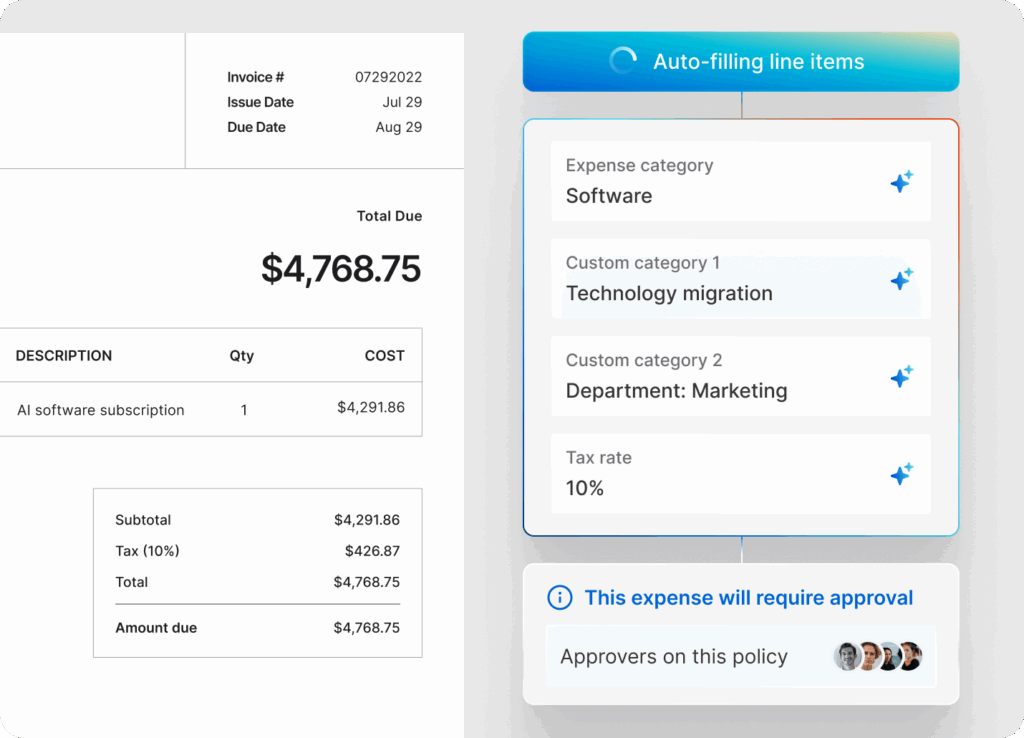
Put AI to work in your finance workflow.
Help reduce repetitive tasks, improve visibility and assist your team in working more efficiently with AI built into everyday finance processes.
6. How accurate and explainable are outputs?
Fast answers aren’t much use if nobody trusts them.
If AI flags a transaction or recommends an approval, your team should be able to understand why. Look for solutions that:
- Explain how conclusions were reached
- Show the data used
- Record decisions and changes
- Allow people to review and override outputs
- Monitor accuracy over time
- Flag uncertain or incomplete information
Find out how the vendor tests its models, measures accuracy and handles incorrect outputs.
Ask the vendor: How do you measure accuracy, explain recommendations and handle incorrect or uncertain results?
7. Will it grow with our business?
The AI market is quickly evolving, but the solution you choose should still support your business as your needs change.
Look beyond today’s feature list. Consider whether the platform can support:
- More users
- Higher volumes
- New markets
- Additional entities
- More complex workflows
- Changing reporting requirements
- New compliance obligations
Review the vendor’s product roadmap, investment priorities and track record of improving the platform.
Understanding migration options and long-term support plans can reduce risk if priorities change.
Ask the vendor: How will the platform support increased complexity, volume and geographic expansion?
8. Will the pricing remain sustainable?
AI pricing models can vary significantly, from fixed subscriptions to usage-based models.
Before signing, review contract terms carefully, including:
- Usage limits
- Additional user fees
- Volume-based charges
- Premium features
- Price review clauses
- Minimum commitments
- Renewal terms
- Service levels
- Data export fees
- Exit costs
Clear agreements can help prevent unexpected costs and reduce dependency on a single provider.
Ask the vendor: How will our costs change if usage, transaction volumes or user numbers double?
9. Will people actually adopt and use it?
Technology alone doesn’t create value. Adoption does.
Consider who will manage implementation, how employees will be trained and what processes may need to change.
Effective AI tools feel helpful from day one. They aim to solve familiar problems, work with existing processes and don’t require months of training before anyone sees the benefit.
Involve employees early. Their feedback can reveal practical issues that may not appear during a vendor demonstration.
Ask the vendor: What support do you provide to help employees adopt the platform and change existing processes?
10. Does it support our governance framework?
As AI adoption grows, governance becomes increasingly important.
The right AI software should support your internal controls rather than operate outside them.
Look for features that enable:
- Human review
- Approval controls
- Role-based access
- Consistent policy checks
- Decision logs
- Audit trails
- Exception handling
- Performance monitoring
- Clear accountability
The goal isn’t to remove people from the process. It’s to help remove repetitive work while keeping responsibility and oversight firmly with your team.
Ask the vendor: How does the platform support our approval processes, internal controls and audit requirements?
Invest in AI that delivers business value.
Effective AI platforms mightn’t have the longest feature list. AI is often most effective when your team actually uses it — because it saves them time, fits the way they work and helps them make better decisions.
Ask these questions before you invest, and you’ll be in a much stronger position to choose AI that delivers lasting value.
Ready to put this into practice? Book a demo with OFX today.