From corporate cards to reimbursements and international payments, company spend can be fragmented across multiple systems.
Compounded with manual and delayed reconciliations, disconnected reporting, all these could be a nagging gap between where your money went and where your books say it should have gone.
The solution isn’t just another tool, it’s a unified spend management platform that consolidates every spend channel into a single source of truth. Today, leading finance teams are adopting this approach as a fundamental operating standard.
Here’s how you can follow in their footsteps.
Why consolidation matters.
Bank cards here, software subscriptions there, spreadsheets somewhere else. Most businesses still juggle payments, cards, receipts and reimbursements across multiple systems. This fragmented approach blurs real-time visibility into spending, disrupting budgeting and forecasting. It also creates manual bottlenecks for approvals and reconciliation.A truly consolidated platform gives finance teams one dashboard for all spend types, from local employee expenses to international vendor invoices, so they can see every dollar in flight and at rest, with minimal manual effort.
The step-by-step framework finance teams use.
Many high-performing finance teams use the following steps to turn disjointed spend into structured and real-time financial insight:
- Consolidate local and global spend channels in one platform.
- Issuing instant virtual or physical cards with pre-set budgets.
- Enforcing receipt capture at point of sale.
- Auto-matching receipts to transactions.
- Pushing fully-coded entries to the general ledger in real time.
Let’s unpack each step.
Step 1: Consolidate all spend channels.
The first breakthrough is to stop managing spend in silos. Traditional systems treat corporate cards, payments, vendor bills and reimbursements as separate. A true spend-management platform brings them together under one roof:
- Employee expenses
- Corporate and virtual cards
- Supplier invoices and bill pay
- Reimbursements and out-of-pocket claims
This consolidated view becomes the single source of truth for financial data across the business. Finance teams see what’s been spent, by whom, and on what in real time, not at month-end.
With this unified structure, teams can reduce errors, plan ahead and uncover cost-savings opportunities that were previously buried in spreadsheets.
Step 2: Issue virtual or physical cards with pre-set budgets and limits.
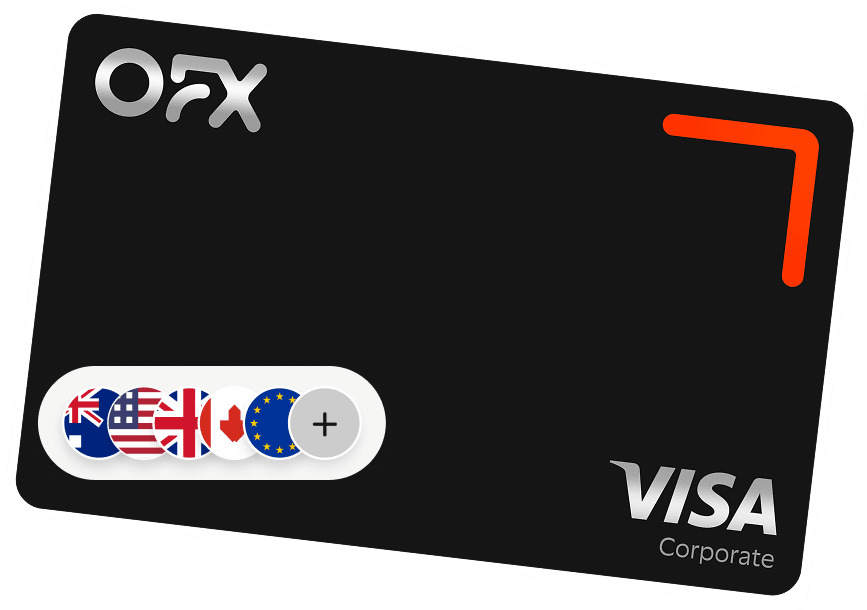
Once spend channels are consolidated, the next step is proactive control: issue spend tools that enforce rules before transactions occur. Global financial platforms like OFX allow you to create virtual cards instantly for employees, specific projects, subscriptions or one-off payees, and have control features such as setting pre-set budget limits and assigning approval workflows before spend.
This means you can ring-fence project budgets, eliminate shared cards and prevent unapproved spend before it happens. Virtual cards behave like traditional cards (with card numbers, expiry dates and CVV codes), but without the plastic, so they’re easy to issue, manage and cancel on demand, with less risk if details are compromised.
For purchases where physical presence is needed (like travel or car hire), physical corporate cards complement virtual ones, linking seamlessly into the same system and accounts.
The outcome? Spend happens within approved pathways, with no surprises hiding in manual reports.
Step 3: Enforce receipt capture when card spend happens.
One of the biggest drains on finance teams’ productivity is chasing receipts. Smarter platforms embed receipt capture as spending happens:
- Employees snap a receipt in a mobile app immediately after purchase.
- OCR technology extracts line item details from uploaded receipts.
- Receipts are linked automatically to the corresponding transaction.
- Employees can code the receipt by adding the relevant spend details as they capture them, reducing work for finance later.
- Once it’s been reviewed and approved by the team manager or someone from finance, the transaction is reconciled with connected finance systems.
This transforms receipts from paper clutter into structured data that updates in real time, removing hours of manual admin. Whether an employee is in the office or travelling overseas, all spend becomes visible instantly.
Step 4: Auto-match receipts to transactions.
Capturing receipts is one thing; matching them to the right transactions is another. Manually reconciling receipts and card charges (especially when employees use their own cards or even cash), is a known bottleneck for finance teams and a major source of errors that cascade into delayed reporting and inaccurate books.
Modern spend management platforms match receipts to transactions automatically using intelligent algorithms and merchant recognition technology. This means:
- No more waiting for end-of-month card statement downloads.
- Fewer discrepancies in reconciliation.
- Faster policy enforcement and audit readiness.
Because every transaction can be tied to a digital receipt and spend category as it happens, you significantly reduce retrospective guesswork and speed up close processes.
Step 5: Push fully-coded entries to the general ledger in real time.
With consolidation and automation in place, the final, and arguably most transformational, step is to connect your spend platform directly to your accounting system and general ledger.
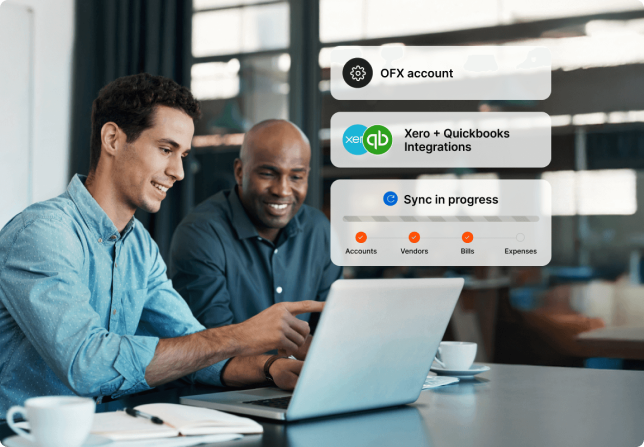
Platforms that support integration with major accounting software like Xero, and QuickBooks Online enable seamless accounting flow, such as:
- 2-way sync with your chart of accounts.
- Real-time posting of coded transactions.
- Automated reconciliation of card, invoice and reimbursement data.
This means finance teams are no longer reconciling after the fact. Spend data updates automatically in the ledger, helping to ensure that your books reflect what’s happening in the business now, not weeks later.
Join 37,000+ businesses globally regaining control with OFX today.
Simplify your business financial operations in one platform and save time and money.
Outcomes you can expect.
Follow these steps and enjoy the results:
- End-to-end spend visibility.
No more waiting for manual reports — you see every transaction against every budget, team and vendor instantly. - Fewer bottlenecks.
Automated approvals and receipts mean that control doesn’t slow down the business — it accelerates it. - Stronger compliance and governance.
Spend rules are enforced at the point of purchase and audit trails are complete and searchable. - Seamless international operations.
For global businesses, multi-currency accounts and local payments reduce FX fees and simplify cross-border payments. - Finance team empowerment.
By decreasing repetitive manual tasks, finance teams can focus on strategic planning and value-add work.
A global business platform that scales with you.
The brilliance of this framework is its scalability. Whether you’re a startup with a handful of employees or a multi-entity global company, the same principles apply:
- Consolidate every spend type.
- Empower teams with controlled, pre-approved cards.
- Automate data capture and reconciliation.
- Sync with your accounting system.
And because this model is built into the platform, not bolted on, you avoid creating new bottlenecks even as spend grows in volume and complexity. Integration, automation and policy enforcement happen seamlessly within a single platform.
Your finance teams deserve better.
Spend management isn’t about controlling expenditure after it’s happened. It’s about giving teams the tools to spend responsibly, with clarity and control, in real time. The framework above isn’t a wish list. It’s the roadmap that leading finance functions follow to update their processes and reclaim control of company spend.
When your spend platform consolidates every channel, enforces policy at the point of spend, automates receipt and transaction matching, and integrates with your accounting system, you unlock visibility that was once only possible in theory, now made practical.
That’s not just spend management, that’s strategic financial control.
Ready to manage all your payments in one simple account?