Multiple factors affect whether or not you need to pay tax on money transferred from overseas.
- The source of the funds: inheritance, gift, proceeds from the sales of a home, etc.
- The tax laws of both countries (where the assets originate from and where they are being sent).
- The amount of money you’re transferring.
- Your residency status.
Please be advised that while every effort is made to keep this information up to date, OFX does not provide tax advice, and you should always consult a tax professional about your unique circumstances.
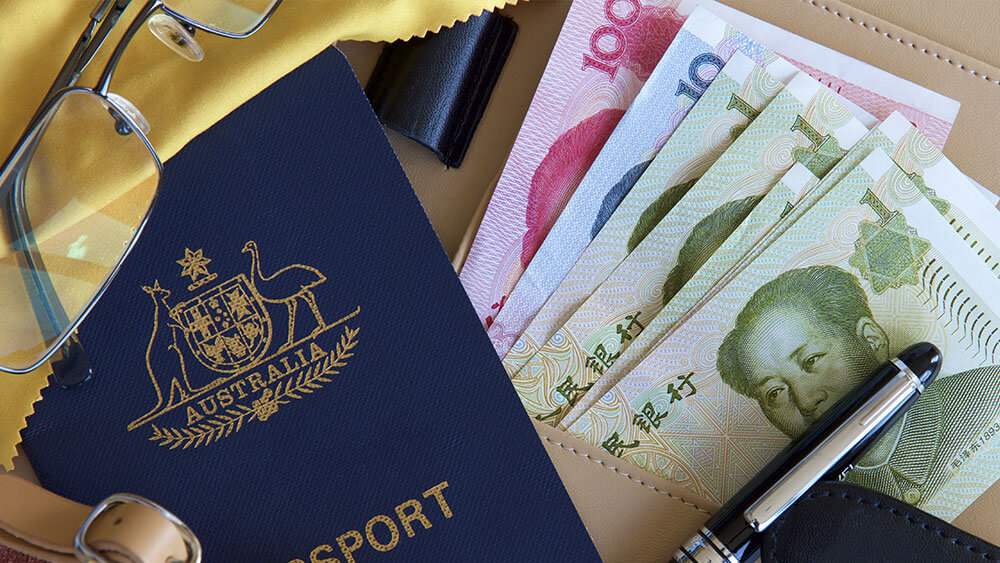

What are the tax Implications of sending money overseas?
Generally speaking, if you are transferring your own existing assets to yourself, you will probably not be required to pay additional taxes on the money. For example, if you are an American who has moved to Australia, and you want to move your savings account to Australia, you will usually not be obliged to pay additional tax.
Transferring existing assets to your spouse is also not usually taxed in most countries.
Once you become a legal resident of a new country, income you earn from overseas will often be taxed, and that income can include capital gains, pension payments, and employment income.
Because all countries have different tax structures, it’s best to research the specific countries involved before transferring.
Transferring large sums of money abroad
If you’ve received a lofty inheritance or have sold a property overseas and wish to transfer the money, various taxes may apply such as inheritance tax, gift tax, or capital gains tax. However, once those taxes are paid in the local jurisdiction where the assets originate, and the funds are yours, you may not have to pay tax again to repatriate the funds overseas. Many, but not all, countries have double-taxation treaties in place, which protect citizens from paying tax on the money twice. However, you may be required to furnish proof that you paid any estate or gift tax to a foreign government.
While you may not need to pay tax on large sums of money being sent abroad, some governments will require you to file a declaration that you are bringing the money into the country. Failing to declare the assets could result in a fine. Again, contact a professional or check the websites of the local tax authorities to see what you need to do to comply.
Moving a retirement account overseas
Because pension or retirement accounts often have complicated tax limitations regarding early withdrawal or using the account to fund certain investments, you will want to check the local tax laws that apply in both jurisdictions when moving your pension overseas. There may be different limitations if you were hoping to transfer the entire balance of your retirement account versus transferring smaller monthly payments of say, $5,000.
If you are receiving regular payments from a pension abroad and want to reduce the costs associated with converting the money to your local account, use OFX to get better exchange rates and lower fees on recurring transfers.
Sending money or financial support to family overseas
Most countries make a distinction between financial gifts and other types of support for family overseas. For example, when paying tuition for study abroad, it is unlikely that you will be taxed on such an expenditure, especially if the child is considered a dependent for income tax purposes.
However, if you simply want to give your mature son or daughter a lump sum of money, it may be considered a gift and there could be tax implications. Check with your accountant to determine what, if any, taxes may apply for both parties.
If you are paying for medical procedures or other health care costs associated with aging relatives, these are not usually considered gifts, but different governments have different guidelines for determining if tax is required.

Making tax payments to foreign governments
If your residency status changed during the tax year or you need to pay capital gains tax on assets sold overseas, you can use OFX to transfer money swiftly and securely while saving big on bank fees and margins. Banks often charge a margin of up to 5% on the daily exchange rate in addition to hefty transaction fees, so on a $10,000 transfer, you could pay $500 to your bank. We think that’s too much.
When you are ready to make your overseas money transfer, use OFX so you don’t get stung by high bank fees and margins. Our exchange rates are consistently competitive, so you can keep more of your hard earned cash.
IMPORTANT: The contents of this blog do not constitute financial advice and are provided for general information purposes only without taking into account the investment objectives, financial situation and particular needs of any particular person. OzForex Limited (trading as OFX) and its affiliated entities make no recommendation as to the merits of any financial strategy or product referred to in the blog. OFX makes no warranty, express or implied, concerning the suitability, completeness, quality or exactness of the information and models provided in this blog.