
Key takeaways
- Corporate cards give a business real-time spend visibility, built-in controls, and no out-of-pocket employee reimbursements.
- The best business corporate cards balance monthly fees, FX cost, rewards, spend controls, and whether you want a debit, charge, or credit product.
- The OFX Corporate Card is a multi-currency Visa Business Debit Card inside a connected platform, with spend controls, virtual and physical cards, and Xero and QuickBooks Online sync.
For many UK finance teams, keeping company spend under control means wrangling personal cards, paper receipts, and unexpected foreign transaction fees. This guide compares the best business corporate cards in the UK for 2026 to help you find spend control, rewards, real-time visibility, and multi-currency spending.
Jump to:
• The best business corporate cards in the UK for 2026
• Business corporate cards compared: fees and features
• What is a business corporate card (and how it differs from a business credit card)?
• How to choose the right business corporate card
• Managing team spend: controls, expenses and accounting
• How to apply for a business corporate card (and eligibility)
• FAQs about the best business corporate cards
The best business corporate cards in the UK for 2026.
The best business corporate card depends on how you spend: at home or abroad, on credit or from your own balance, and how much control you need over team expenses. Our shortlist of the best corporate cards UK businesses use covers a multi-currency debit option, digital-first spend cards, and traditional cashback and rewards cards, so there’s a fit whether you’re comparing the best business credit cards for startups or running a finance team of 250.
Business cards matter more than ever for UK companies. According to the British Business Bank, credit cards are the most-used external finance product for smaller businesses, at 19% in Q3 20251, ahead of overdrafts at 16%1. Choosing well can cut cost and admin across the whole team.
OFX Corporate Card: best for multi-currency spend and connected control.
The OFX Corporate Card is a Visa Business Debit Card linked to your OFX Global Business Account, so you spend from available funds with no interest and no debt. Hold and spend in 30+ currencies with no international transaction fee on held balances2, and use competitive auto-conversion when you spend a currency you don’t hold. Issue virtual and physical cards with per-card budgets, spend limits, and merchant category controls. Plans start at £0/month on Standard, with Full Suite at £75/month including 5 users3. This is a strong multi-currency business card for teams that spend across markets and want spend controls in one place.
Revolut Business: best for digital-first FX allowances.
Revolut Business suits teams that want a slick app and built-in FX allowances. Plans are £10/month (Basic), £35/month (Grow), and £125/month (Scale)4. FX is 0% within your plan allowance, 0.6% over it, and an extra 1% out of hours, with a free FX allowance of £1,000 on Basic, £15,000 on Grow, and £60,000 on Scale4.
Barclaycard: best-known high-street business card.
Among the business cashback cards UK companies compare, Barclaycard is a familiar high-street name. Its Select Cashback card has no annual fee and pays 1% uncapped cashback when you spend £2,000 or more a statement month, Premium Plus is £150 a year with 0.5% cashback and a lower 0.99% non-sterling fee, and a Select charge card is £42 a year. Its credit cards give up to 56 days interest-free, from a representative 25.5% APR (variable)5.
American Express Business Gold: best for rewards and travel.
American Express Business Gold is a charge card built around rewards and travel perks, earning 1 Membership Rewards point per £1 of spend. The annual fee is £195, waived in the first year for new Cardmembers, and it gives up to 54 days to pay with up to 20 free employee cards. As a business charge card UK buyers choose, it carries a 2.99% non-sterling fee on foreign spend6.
Capital on Tap: best all-rounder with cashback and a credit line.
Capital on Tap is a popular all-rounder that combines a business credit line with uncapped 1% cashback on card spend. The Free plan has no annual fee and the Pro plan is £299/year, with no foreign transaction fees, a credit limit up to £250,000, up to 42 days interest-free, and rates from 13.86% APR (variable)7.
Metro Bank Business Credit Card: best for European spend.
Metro Bank’s business credit card is a strong pick for European spend, with no foreign transaction fee in listed European countries and a 2.99% fee elsewhere. It has no annual fee, up to 56 days interest-free, a representative APR of 18.9% (variable), and lets you link up to 9 cardholders. You’ll need a Metro Bank business current account to apply8.
If you mainly need to control day-to-day expenses, dedicated business expense cards such as Pleo and Soldo are also worth a look. Pleo plans start at £8 per user/month (Start)9 and Soldo at £21/month plus VAT (Standard)10, both with virtual company cards and receipt capture built in.
Business corporate cards compared: fees and features.
Total cost is more than a headline monthly fee. A low subscription can be undone by a high FX markup, so weigh the foreign transaction cost alongside the fee. The table below sets the monthly or annual fee as its own line, then groups the other costs to compare.
| Card | Monthly / annual fee | Foreign transaction / FX cost | Cashback / rewards | Interest-free period | Multi-currency accounts | Best for |
|---|---|---|---|---|---|---|
| OFX Corporate Card | £0/month Standard; £75/month Full Suite (5 users), then £10/month per extra user3 | No international transaction fee on held balances; competitive auto-conversion on other currencies2 | Cashback on eligible card spend (terms apply); earn card rewards on supplier payments via Pay by Card | Not applicable (debit, drawn from your balance) | Yes, 30+ currencies; local details in GBP, EUR, USD, and CAD2 | Multi-currency spend with connected expense control |
| Revolut Business | £10 (Basic), £35 (Grow), £125 (Scale)4 | 0% within allowance, 0.6% over, +1% out of hours4 | Varies by plan | Not applicable (spend from balance) | Yes | Digital-first teams wanting FX allowances |
| Barclaycard | £0 (Select Cashback) to £150/year (Premium Plus)5 | 0.99% (Premium Plus) to 2.99% (Select)5 | 1% uncapped over £2,000/month (Select Cashback); 0.5% (Premium Plus)5 | Credit card; up to 56 days; from 25.5% rep APR (variable)5 | No | Familiar high-street name |
| American Express Business Gold | £195/year (£0 in year one)6 | 2.99% non-sterling6 | 1 Membership Rewards point per £1; travel perks6 | Charge card; up to 54 days6 | No | Rewards and travel |
| Pleo | £8 per user/month (Start)9 to higher tiers | 2.00% (Start) to 1.49% (Optimise)9 | Up to 1% on yearly plans9 | Charge and credit options | Limited | Expense management |
| Soldo | £21/month plus VAT (Standard)10 | Mastercard rate + 1.5%11 | No | Not applicable (prepaid) | Yes | Prepaid expense control |
| Capital on Tap | Free £0/year; Pro £299/year7 | 0% (no foreign transaction fee)7 | 1% uncapped (Pro 1.25% on preloaded spend)7 | Credit line; up to 42 days; from 13.86% APR (variable)7 | No | All-rounder with a credit line |
| Metro Bank Business Credit Card | £0 annual fee8 | 0% in listed European countries; 2.99% elsewhere8 | None | Credit card; up to 56 days; 18.9% rep APR (variable)8 | No | European spend |
Where a provider does not publish a figure, we’ve flagged it rather than left a blank, so you can confirm the current rate before you apply.
What is a business corporate card (and how it differs from a business credit card)?
A corporate card, sometimes called a company card, is a card your business issues to staff for work spend, with controls and reporting attached. It keeps team purchases on one account instead of personal cards and reimbursements. Card payments are now central to UK commerce, with UK card transactions worth £1 trillion in 202412. Corporate cards come in three main shapes, and the difference decides whether you take on interest, debt, or a credit check.
A business credit card gives you a credit line and a short interest-free window, then charges interest on the balance you carry. A business charge card UK providers offer, such as one from American Express, expects the balance cleared in full each cycle. A corporate debit card, or business debit card, draws from your own balance, so there’s no interest and no debt. The corporate card vs business credit card choice really comes down to whether you want to borrow or spend what you already hold.
Corporate card vs business credit card vs debit card.
With a business credit card, the business borrows, pays interest on carried balances, and may need a personal guarantee. Section 75 of the Consumer Credit Act gives purchase protection on qualifying credit card transactions, which is worth checking when you apply. A corporate debit card spends within available funds, with instant lock or cancel and no impact on employee personal credit. For finance teams that want tight control without a credit line, the debit model keeps spend inside what the business already holds.
How to choose the right business corporate card.
Start with how you want to manage cash flow. If you want to spend what you hold and avoid interest, a corporate debit card fits. In a 2024 Bank of England survey, 77% of UK SMEs said they would accept slower growth rather than borrow to grow faster13, which is one reason debit and spend cards appeal to cautious finance teams. If you need a credit line or a longer interest-free float, a credit or charge card suits better. Match the card type to your finances first, then compare cost.
Look at total cost, not just the monthly fee. Add the FX or foreign transaction cost, any interest, and per-user charges. For cross-border teams, a business card with no foreign transaction fees on held balances and a genuine multi-currency business card account can save more than a small cashback rate returns. Traditional banks often charge higher FX markups and monthly fees, and support one currency per account, so weigh those costs too. UK SMEs exported £107.9 billion of goods in 2023, just over a quarter of UK exports14, so foreign transaction cost is a real line item for many growing teams.
Then weigh controls and team size: per-card limits, virtual company cards, approval workflows, and accounting sync. Rewards and cashback are useful, and business cashback cards UK teams like can pay off on domestic spend, but for the best corporate cards UK finance teams should rank FX cost and control ahead of a headline cashback rate. If a card alone won’t serve you, a multi-currency account or dedicated expense platform can fill the gap.
Rewards and points: are they worth it?
Traditional banks credit card reward points and American Express Membership Rewards can add real value. The catch is that the earn rate has to beat the annual fee and any foreign transaction cost. On many business credit cards, high overseas spend quietly erodes the points you earn.
OFX Corporate Debit Cards don’t earn card rewards or points directly. Instead, Pay by Card lets you earn reward points on expenses suppliers don’t usually accept on card, such as rent, tax bills or supplier invoices. You use an eligible American Express, Visa or Mastercard rewards credit card routed through OFX. OFX doesn’t guarantee points accrual, which depends on the card issuer’s rewards program terms.
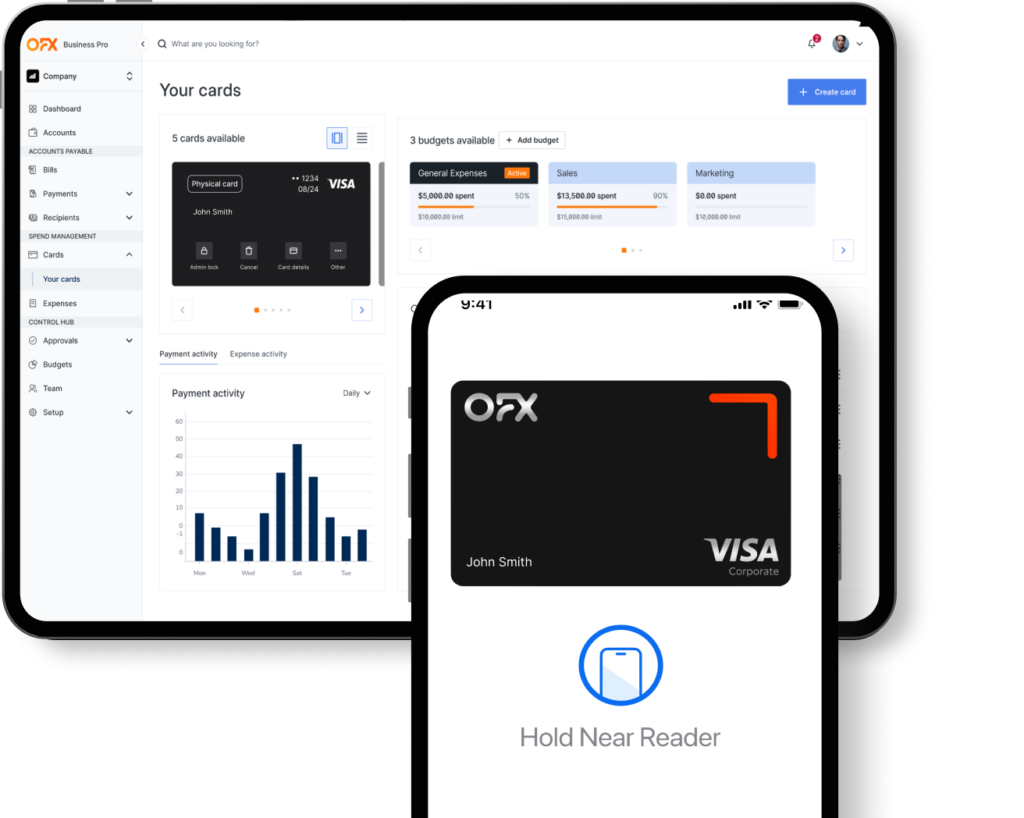
OFX Corporate Card
Gain greater control and visibility by managing your domestic and international expenses and approvals all in one place.
Managing team spend: controls, expenses and accounting.
Modern corporate cards are as much about control as payment. With OFX, you can set per-card budgets, spend limits, and merchant category restrictions, then issue virtual and physical cards in the formats each person or vendor needs. Virtual company cards suit online subscriptions and one-off vendors, while physical cards handle travel and tap-and-go. You can lock or cancel any card instantly from the OFX Business App.
Expense admin shrinks when cards connect to your accounting. OFX captures receipts three ways, files spend after purchase, and gives real-time visibility of pending and approved expenses across teams. Two-way sync with Xero and QuickBooks Online reconciles transactions automatically, so month-end close is faster. These are the connected business expense cards and workflows finance teams ask for.
This is where OFX stands apart: cards, spend management, AP automation, FX, and accounting sync sit in one connected platform, backed by 24/7 human phone support rather than chatbots. OFX pairs this with encrypted mobile wallets, two-step verification, and fraud monitoring built in.
How to apply for a business corporate card (and eligibility).
Eligibility depends on the card type. Credit and charge cards usually check business trading history, turnover, and often a personal guarantee and a credit check on a director. Debit and e-money spend accounts typically have lighter onboarding, because you spend from your own balance rather than a credit line. You’ll typically need your company details, proof of identity for signatories, and business bank information.
Why finance teams choose OFX for corporate cards.
OFX brings corporate cards, a multi-currency Global Business Account, AP automation, spend management software, and FX Solutions into one connected platform. That means you can control company spend, issue business expense cards, pay suppliers, and manage currency in the same place, instead of juggling separate tools and logins.
For finance teams with multi-currency spend, the debit model is the difference. You spend from held balances in 30+ currencies with no international transaction fee, no interest, and no debt, and cards don’t touch an employee’s personal credit. Add cashback on everyday spend, no minimum balance, a free Standard plan, and 24/7 human phone support, and it’s built for businesses that spend across borders.
And with OFX Pay by Card, you can route payments to suppliers who don’t normally take cards, using an eligible rewards credit card, so you keep earning points where your issuer’s program allows.
Getting started is quick. Registration takes under 10 minutes online, verification is typically 2–3 business days, and you get immediate platform access while KYC completes. See our business pricing for more details.
Frequently asked questions about the best business corporate cards:
What is the difference between a corporate card, a business credit card, and a business debit card?
A business credit card borrows against a credit line and charges interest on carried balances. A charge card expects full repayment each cycle. A corporate debit card spends from your own balance, with no interest and no debt.
Do business or corporate cards affect your personal credit score?
Credit and charge cards can involve a personal guarantee and a credit check, which may affect a director’s personal credit. A debit or e-money spend card linked to the company account does not impact employee personal credit.
Can a startup or new business get a corporate card?
Yes. Some of the best business credit cards for startups still expect trading history or a personal guarantee, while a debit-based spend account like OFX has lighter onboarding, because you spend from your balance rather than a credit line.
What fees should I expect?
Expect a monthly or annual fee, possible per-user charges, an FX or foreign transaction cost, and, on credit products, an APR on carried balances. Add these together to compare the true cost.
Can I get a corporate card with no foreign transaction fees or for multi-currency spend?
Yes. A multi-currency card that holds balances can avoid foreign transaction fees on money you already hold. The OFX Corporate Card charges no international transaction fee on held balances and uses competitive auto-conversion for other currencies.
Can I give employees their own cards and set spend limits?
Yes. Corporate card platforms let you issue virtual and physical cards per person or vendor, set per-card budgets and merchant restrictions, and lock or cancel a card instantly.
How quickly can I get a card set up?
It varies by provider. With OFX, online registration is quick and you get platform access while verification checks finish.
Try OFX Corporate Cards today for greater spend control.
References
- https://www.british-business-bank.co.uk/about/research-and-publications/small-business-finance-markets-report-2026/infographic
- https://www.ofx.com/en-gb/business/corporate-cards/
- https://www.ofx.com/en-gb/business/pricing/
- https://www.revolut.com/legal/business-fees-all-plans-current/
- https://www.barclaycard.co.uk/business/cards/credit-cards
- https://www.americanexpress.com/en-gb/charge-cards/gold-business-card/
- https://www.capitalontap.com/en/business-credit-cards/pro/
- https://www.metrobankonline.co.uk/business/borrowing/products/credit-card/
- https://www.pleo.io/en/pricing
- https://www.soldo.com/en-gb/pricing/
- https://download.soldo.com/legal/FeeSummary/SoldoFinancialServicesFeeSummary-UK.pdf
- https://www.ukfinance.org.uk/news-and-insight/press-release/ps1-trillion-worth-uk-card-transactions-in-2024
- https://www.bankofengland.co.uk/quarterly-bulletin/2024/2024/identifying-barriers-to-productive-investment-and-external-finance-a-survey-of-uk-smes
- https://www.gtreview.com/news/europe/how-can-the-uks-exporting-smes-get-better-access-to-finance/
- https://www.ofx.com/en-gb/faqs/how-ofx-helps-protect-your-money/
Visa is a trademark owned by Visa International Service Association and used under license.
Apple Pay is a service provided by certain Apple affiliates, as designated by the Apple Pay privacy notice. Neither Apple Inc. nor its affiliates are a bank. Any card used in Apple Pay is offered by the card issuer.
Google Play and Google Pay are trademarks of Google LLC.
In the UK, OFX is regulated by the Financial Conduct Authority as an electronic money institution. OFX is not a bank, and so you are not protected by the Financial Services Compensation Scheme when you send money with OFX. Backed by 25+ years of experience and oversight from 50+ regulators worldwide, OFX pairs advanced fraud monitoring with a risk-averse model.
Learn more about how OFX keeps your money and information secure.
IMPORTANT: The contents of this blog do not constitute financial advice and are provided for general information purposes only without taking into account the investment objectives, financial situation and particular needs of any particular person. UKForex Limited (trading as “OFX”) and its affiliates make no recommendation as to the merits of any financial strategy or product referred to in the blog. OFX makes no warranty, express or implied, concerning the suitability, completeness, quality or exactness of the information and models provided in this blog.