
What the joint US–Japan yen intervention could mean for markets.
By the OFX team | 8 August 2026 | 6 minute read
Like many countries, Japan is not always well served by the exchange rate at which its currency trades, and Japanese authorities — the Bank of Japan (BoJ) and the Ministry of Finance (MoF) — have occasionally preferred not to let the market take its course.
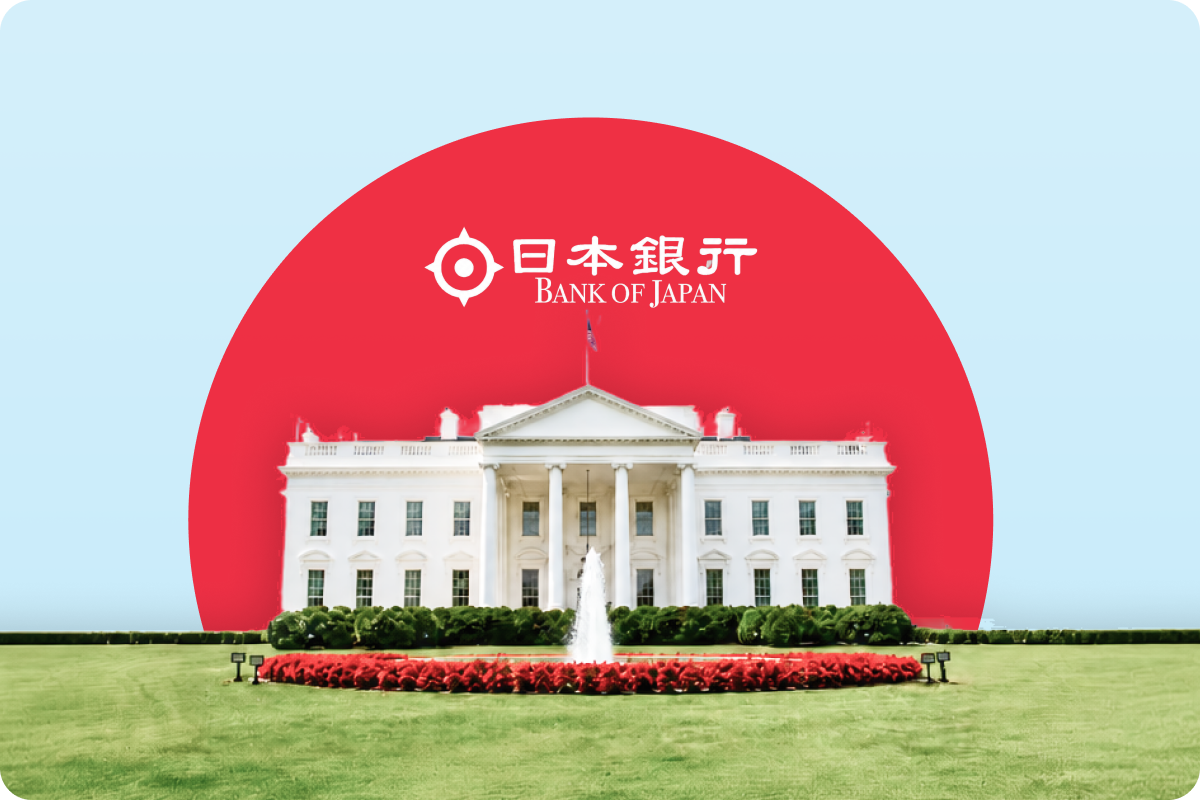
In early August, Tokyo and Washington bought yen together, something markets had not seen in 15 years. While this intervention lifted the currency off 40-year lows, it has left an open question about whether those gains can hold without further official support.
Why Japan steps into the currency market.
Japan has intervened in currency markets many times over the years to influence the yen. Historically, the authorities have typically sought to weaken it; more recent efforts have been aimed at strengthening it.1
Japan moved to support the yen in 2024 and, as recently as April, sold close to US$74 billion (A$105.6 billion) from its foreign exchange reserves to buy yen, after two months of steep declines.2 Those episodes were smaller in scale than what occurred in early August, when Japan’s MoF and the US Treasury bought yen in the first coordinated intervention in 15 years,3 with the Ministry saying the two would “not hesitate to take further action” to halt the yen’s slide to 40-year lows. The last comparable move came in 2011, when G7 countries acted to weaken the yen after the earthquake and tsunami in Japan.4 This time, commentary suggests both Tokyo and Washington want the yen stronger against the US dollar.
The method used on the American side was also unusual, with the New York Federal Reserve reportedly selling euros5 to buy the Japanese currency — Washington’s first intervention in support of the yen since 1998.
What each side stands to gain.
The BoJ’s concern is that a weak yen may raise the cost of imported food, energy and raw materials, driving up inflation and destabilising Japanese bond markets, since investors demand a higher return to offset that inflation risk. Prime Minister Sanae Takaichi’s government shares those concerns, with the added political cost of weaker polling. The bind for both the government and the central bank is that Japan’s large manufacturing exporters would prefer a weaker yen, which may lower the price of their goods overseas.
For the US, a stronger yen may make American exports more affordable for Japanese buyers. The price of US goods in yen is double what it was 20 years ago, according to Richard Michelfelder, a professor of professional practice at Rutgers University.6 Reducing US trade deficits with major partner economies is a stated goal of the Trump administration.
President Trump described helping Japan support the yen as “a sign of friendship and to help the world economy”. There is also likely an element of self-interest. Japan’s usual way of raising cash to support the yen has been to draw on its US$1.3 trillion (A$1.9 trillion) in foreign exchange reserves, or on its holdings of US Treasuries, of which it is the largest foreign owner by some margin7 at US$1.14 trillion (A$1.6 trillion). If Japan were to defend the yen alone, it may require selling large volumes of US bonds — an unwelcome prospect in Washington. Heavy selling can push bond prices down, and because a bond’s coupon is fixed, a lower price means a higher yield for whoever buys it. Those market yields set the benchmark for what the US government must offer on new debt, so its borrowing costs rise. Higher US bond yields can also weigh on share valuations.
That helps explain the use of the euro, and of the Federal Reserve’s Foreign and International Monetary Authorities (FIMA) Repo Facility, a COVID-era arrangement since made permanent8 that allows foreign central banks to obtain US dollar liquidity without selling Treasuries outright. Markets read this as a sign that the US Treasury and the Fed wanted to limit forced selling of Treasuries.
Japan’s Finance Ministry has since said it plans to use the FIMA repo facility for future interventions. Masahiko Loo, senior macro strategist at State Street, said that signal “may be bigger than the intervention itself”.9
Did the intervention work?
In late July, the yen was close to a 40-year low, near 164 to the US dollar, weighed down by still-low interest rates in Japan and concerns over the Takaichi government’s expansionary fiscal policy. The announcement lifted it to 155.256, a gain of more than 5.2 per cent, before the pair stabilised below the 157 level. At the time of writing, it took 158.5 yen to buy a US dollar, leaving the yen 3.3 per cent stronger than before the intervention.
Tokyo spent up to US$59 billion (A$84.3 billion), adding to an estimated US$225 billion (A$321.4 billion) spent on interventions to support the yen since the start of 2024.10 The US has not confirmed the size of its own intervention, though a Reuters photograph11 of a notepad in front of Treasury Secretary Scott Bessent during a cabinet meeting on Friday, July 31, read: “To Do: Buy Japanese Yen $5-10 bil”. For a business buying or selling either currency, official money on this scale is a reminder that USD/JPY can move several per cent in a matter of days, changing the cost of a yen invoice between the day it is agreed and the day it is settled.
What a lasting recovery would need.
For that outlay, the two countries do appear to have supported the yen in the short term. A sustained recovery, though, would likely require tighter BoJ policy — helped further if lower US rates narrow the interest rate gap between the two economies — along with improving economic fundamentals. If investors gain confidence in Japan’s outlook, the resulting shift in investment flows can become self-reinforcing.
The BoJ raised its benchmark interest rate in June to the highest level in 31 years, but the rate remains very low compared with Japan’s peers. That gap continues to encourage the “carry trade”, in which investors borrow cheaply in yen and invest in higher-yielding assets overseas, and the resulting capital outflows have put persistent pressure on the currency.
Investor concerns about Japan’s fiscal position add to that pressure. The country’s debt burden exceeds 200 per cent of gross domestic product, the highest among major economies, and persistent budget deficits have raised concerns that the government is spending beyond its means — which can erode confidence in Japanese assets and the yen.12
For traders, the yen is an unusual market, because the participants include governments that are able and willing to intervene directly. The intervention has lifted the currency from 40-year lows and led analysts to speculate that Japan’s Ministry of Finance is not prepared to see it move past 160 to the US dollar, and that it is aiming to break 155.13 Carry traders, so far, have not obliged.
Net short positions on the yen held by asset managers and leveraged funds (bets that the currency will fall further) have climbed to their highest levels since 2024, according to Commodity Futures Trading Commission data.14 Whether the yen can retest 155 per US dollar in this environment, or slides back below 160, is an important question facing many traders for the rest of the month.
References
- https://www.straitstimes.com/business/economy/why-japan-is-propping-up-the-yen-and-why-the-us-helped
- https://www.straitstimes.com/business/economy/why-japan-is-propping-up-the-yen-and-why-the-us-helped
- https://www.reuters.com/world/asia-pacific/japan-may-have-intervened-fx-market-by-spending-3658-billion-buy-yen-2026-08-03/
- https://www.cnbc.com/2026/08/03/japan-yen-intervention-us-treasurys-euros-.html
- https://www.reuters.com/business/finance/us-shakes-up-currency-markets-with-talk-unusual-yen-buying-via-selling-euros-2026-08-03/
- https://abcnews.com/Business/us-treasury-propping-japanese-yen-experts-explain/story?id=135352201
- https://ticdata.treasury.gov/resource-center/data-chart-center/tic/Documents/slt_table5.html
- https://www.federalreserve.gov/monetarypolicy/fima-repo-facility.htm
- https://www.cnbc.com/2026/08/03/japan-yen-intervention-us-treasurys-euros-.html
- https://russellinvestments.com/content/ri/us/en/insights/russell-research/2026/08/FX-intervention-Japan.html
- https://www.reuters.com/world/asia-pacific/bessents-to-do-list-buy-5-10-billion-worth-japanese-yen-reuters-photo-shows-2026-07-31/
- https://www.straitstimes.com/business/economy/why-japan-is-propping-up-the-yen-and-why-the-us-helped
- https://asia.nikkei.com/business/markets/currencies/japan-launches-fx-intervention-briefly-pushing-yen-to-155-from-160
- https://www.thestar.com.my/business/business-news/2026/08/05/after-intervention-155-emerges-as-yens-big-test