
AI is changing how finance teams interpret data, forecast performance and support decision-making. But the biggest productivity gains don’t come from using AI. They come from asking better questions.
The right prompt can turn AI into a more capable financial analyst that can explain trends, test scenarios and surface potential risks in moments. The wrong prompt could produce generic answers that waste time.
Here are 10 practical AI prompts every finance leader can start using today.
Why AI prompts matter for finance leaders.
Finance leaders don’t need AI to replace their judgement. They need it to reduce the time spent getting to that judgement. The best prompts don’t simply ask AI to look at data. They give it context, assign it a role and explain what outcome you’re trying to achieve.
For example, asking AI to “Recap this report” will usually produce a generic overview.
Asking it to “Review this report as a CFO preparing for a board meeting. Highlight the three biggest risks, explain the drivers behind them and recommend management actions.” can produce a much more useful response.
The difference isn’t the AI model. It’s the prompt.
AI works particularly well when helping finance teams:
- Interpret large datasets.
- Explain trends and anomalies.
- Model different scenarios.
- Recap reports.
- Draft executive communications.
- Surface risks worth investigating.
It works effectively when paired with human oversight. AI can identify patterns quickly, but it doesn’t understand your business priorities, customer relationships or strategic context. Final decisions should always stay with your team.
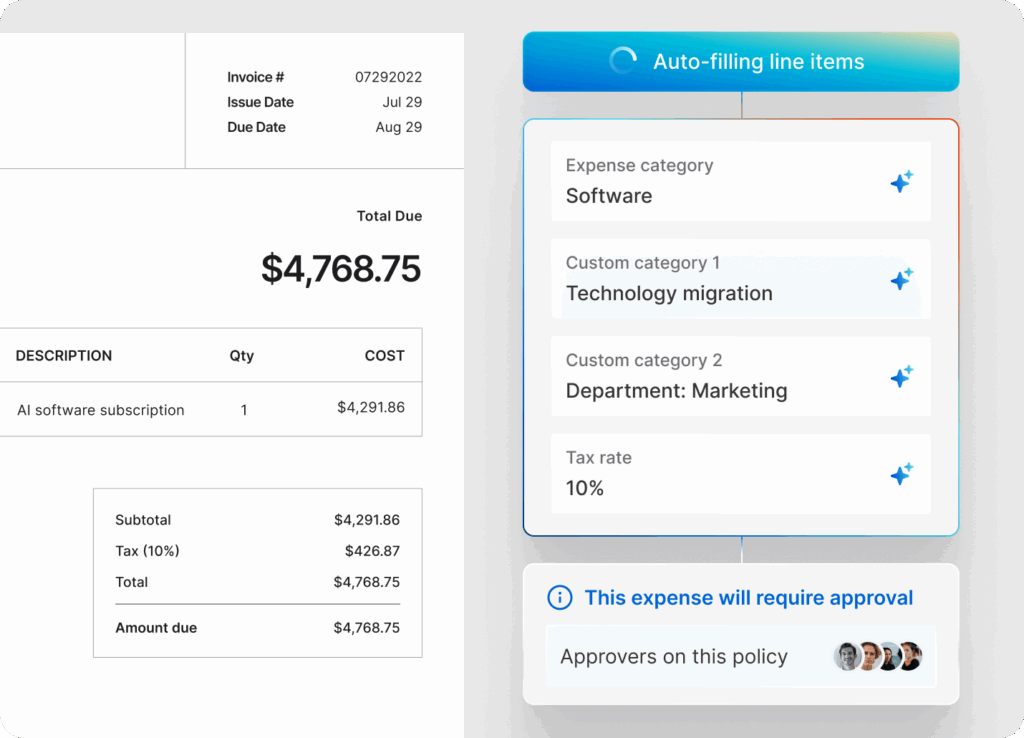
Put AI to work in your finance process with OFX AI Workflows.
Answer questions, complete routine tasks and work more efficiently with AI that’s built into your finance workflow.
Top 10 AI prompts for finance teams.
1. Explain financial performance.
Use it when: Preparing monthly reports or board packs.
Why it matters: AI helps explain what’s driving financial performance, so you spend less time interpreting results and more time deciding what to do next.
Prompt: ‘Act as a CFO preparing for a board meeting. Review this profit and loss statement. Identify the three biggest drivers of revenue growth and margin movement. Rank them by materiality, explain the likely causes, highlight any assumptions you’re making, and recommend management actions. Present the findings as executive-ready bullet points.’
Keep in mind: AI can explain patterns in the data, but only your team knows about one-off business events, acquisitions or strategic investments that may have influenced the results.
2. Build scenario plans faster.
Use it when: Forecasting, budgeting or preparing for uncertainty.
Why it matters: AI can help evaluate multiple assumptions in minutes, making it easier to evaluate potential outcomes before making decisions.
Prompt: ‘Using these assumptions, create best-case, base-case and worst-case financial scenarios. Show the impact on revenue, EBITDA, operating cash flow and working capital. Highlight the assumptions used, explain the biggest risks and opportunities for each scenario, and identify which assumptions have the greatest influence on the outcome.’
Keep in mind: The quality of the scenarios depends entirely on the assumptions you provide.
3. Improve cash flow visibility.
Use it when: Reviewing working capital or treasury performance.
Why it matters: AI helps identify emerging cash flow issues and liquidity opportunities before they become larger problems.
Prompt: ‘Review this cash flow data and identify the biggest drivers of cash movement. Recommend practical ways to improve liquidity, shorten payment cycles and reduce working capital pressure. Rank recommendations by financial impact, implementation effort and expected time to increase benefits.’
Keep in mind: AI can suggest opportunities, but supplier relationships and commercial considerations still need human judgement.
4. Explain budget variances.
Use it when: Month-end close or management reporting.
Why it matters: AI can prepare a first draft of variance analysis so finance teams can focus on investigation rather than explanation.
Prompt: ‘Compare actual results against budget. Group variances into pricing, volume, timing and one-off events. Explain each variance, assess its materiality and recommend whether management should monitor, investigate or take action.’
Keep in mind: Always validate unusual variances before sharing them with stakeholders.
5. Write board-ready financial summaries
Use it when: Preparing executive reports.
Why it matters: Executives need the story behind the numbers, not every line item.
Prompt: ‘Turn this financial information into a board-ready summary. Highlight key performance outcomes, major risks, emerging trends and strategic priorities. Keep the tone objective and suitable for executives.’
Keep in mind: Review the summary to ensure it reflects current business priorities.
See what’s possible with AI Workflows.
6. Review costs with a CFO mindset.
Use it when: Looking for efficiency opportunities.
Why it matters: Fresh perspectives can reveal spending patterns that become easy to overlook over time.
Prompt: ‘Act as a disciplined CFO reviewing company expenditure. Identify unnecessary spending, duplicated costs, low-value subscriptions and opportunities to improve profitability. Sort recommendations by estimated annual savings and implementation effort.’
Keep in mind: Not every cost is inefficient. Strategic investments may appear expensive but deliver long-term value.
7. Identify financial risks
Use it when: Reviewing transactions, expenses or operational data.
Why it matters: AI can scan thousands of records far faster than manual review, helping flag unusual activity that needs closer attention.
Prompt: ‘Review this financial dataset and identify unusual transactions, spending patterns or operational risks. Explain why each item has been flagged and recommend whether it should be investigated further.’
Keep in mind: AI identifies patterns, not fraud. Every flagged transaction should be reviewed before action is taken.
8. Accelerate due diligence
Use it when: Assessing acquisitions or investment opportunities.
Why it matters: AI won’t replace due diligence, but it can reduce the time spent reviewing large volumes of information.
Prompt: ‘Review this company’s financial statements and identify financial strengths, key risks, profitability trends, valuation considerations and areas that require additional investigation. Present the findings as an executive due diligence report.’
Keep in mind: Legal, commercial and regulatory reviews remain essential.
9. Benchmark performance
Use it when: Reviewing KPIs or setting performance targets.
Why it matters: Performance is easier to evaluate when you understand what’s normal for your industry.
Prompt: ‘Compare our financial KPIs against industry benchmarks for businesses of similar size and sector. Identify areas of underperformance, explain possible causes, recommend improvement opportunities and highlight where we’re outperforming the market.’
Keep in mind: Benchmarks should always be interpreted alongside your own business strategy.
10. Explain financial information for non-finance audiences
Use it when: Communicating with executives, boards or business stakeholders.
Why it matters: Finance teams often need to translate complex analysis into clear business language.
Prompt: ‘Explain this financial report for a non-financial executive. Avoid accounting jargon, highlight what matters most, explain why it matters and recap the business implications in fewer than 300 words.’
Keep in mind: Tailor the final version to your audience and business priorities.
The AI tools finance leaders actually use.
Most finance teams don’t rely on a single AI tool. They combine general AI tools with purpose-built finance software, using each where it adds the most value.
General AI assistants such as ChatGPT, Claude and Gemini excel at reasoning, recapping, drafting and interpreting information. They’re ideal for reviewing reports, testing scenarios, preparing executive communications and brainstorming ideas.
Purpose-built finance AI tools work differently. Because they’re integrated into finance systems and workflows, they can assist in automating approvals, reconciling transactions, answering questions using company data and supporting operational processes with greater context and governance.
| Tool type | Best used for |
| ChatGPT, Claude, Gemini | Research, analysis, writing, and brainstorming. |
| Excel with Copilot | Spreadsheet analysis, formulas and financial modelling. |
| Power BI | Dashboards, trend analysis and reporting. |
| ERP AI features | Forecasting, reporting and planning. |
| Finance automation platforms | Invoice processing, policy checks, approvals, reconciliation and transaction monitoring. |
What AI should give finance teams back.
The value of AI isn’t simply about completing work faster. It’s about creating capacity for higher-value work.
Done well, AI should help finance teams gain:
- More time: Streamline manual analysis and repetitive reporting.
- Better visibility: Identify trends and unusual activity sooner.
- More confidence: Provide additional context to support decision-making.
- More capacity: Support growing workloads without the same level of manual effort.
The takeaway for finance leaders.
AI isn’t replacing finance leaders. But finance leaders who know how to work with AI will often outperform those who don’t.
The best AI prompts don’t replace judgement. They reduce the time it takes to reach it.
Whether you’re using a general AI assistant or purpose-built finance tools like OFX AI Workflows, the principle is the same: let AI handle routine analysis while your team remains in control of every decision.
Start with these prompts, refine them for your business and make them part of your everyday finance workflow.
Better prompts can foster better insights, helping to support better financial decisions.
Ready to improve more than your prompts? See what OFX can do for your payments.